
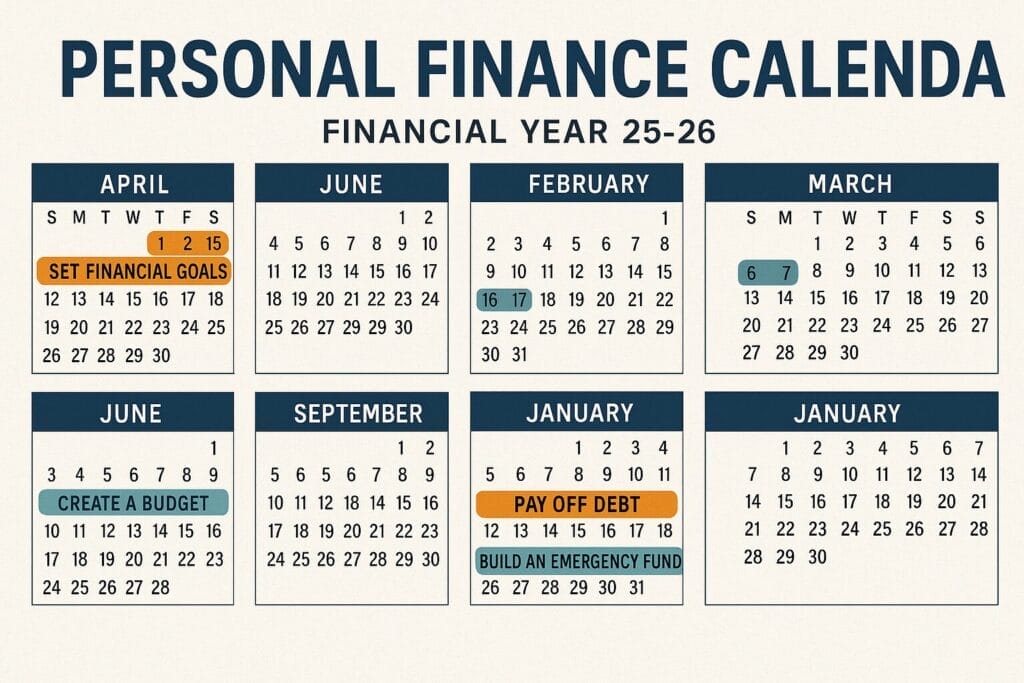
Your personal finance calender for FY 25-26
As you navigate the complexities of personal finance, having a structured approach can significantly enhance your financial well-being. The financial year 2026 presents a unique opportunity for you to take charge of your financial goals, ensuring that you stay on track throughout the year. In this article, we will outline a comprehensive personal finance calendar tailored for financial year 25-26, equipping you with essential dates, tasks, and strategies to manage your income, expenses, investments, and savings effectively. Each month will feature key financial milestones, including tax deadlines, budget reviews, and investment opportunities, which you can leverage to optimize your financial health. By following this calendar, you will not only gain clarity on your financial obligations but also seize opportunities to enhance your wealth-building potential. Whether you are planning for retirement, saving for a major purchase, or simply aiming to improve your budgeting skills, this personalized roadmap will serve as your guide. Prepare to embark on a year of informed financial decisions, proactive planning, and ultimately, greater financial security. Let’s dive into the specific monthly actions you should consider to ensure a prosperous 25-26 financial year.
Review your financial goals quarterly.
Regularly assessing your financial objectives every quarter allows you to stay aligned with both short-term and long-term aspirations. By taking the time to evaluate progress, you can identify areas where adjustments are necessary, whether it be reallocating investments, revising budgeting strategies, or setting new milestones. This proactive approach not only enhances your financial awareness but also empowers you to make informed decisions that can affect your overall financial health.
Quarterly reviews create an opportunity to celebrate achievements, no matter how small. Recognizing progress fosters motivation and encourages you to maintain your focus on the path toward your financial goals. By establishing a routine of reflection and change, you cultivate a resilient financial strategy that can adapt to changes in your personal circumstances or shifts in the economic landscape, ultimately leading to greater financial security and success.
Schedule tax preparation in advance.
Planning your tax preparation well in advance can significantly ease the stress often associated with the tax season. By organizing your documents and gathering necessary information early on, you position yourself to address any potential issues that may arise, such as missing receipts or discrepancies in your records. This proactive stance not only allows for a more accurate income tax return filing but also provides ample time to explore tax-saving strategies and deductions that could benefit your financial situation.
Scheduling dedicated time for tax preparation can lead to a thorough review of your financial year, allowing you to identify trends in your income and expenses. This reflection can be invaluable for future financial planning, helping you make informed decisions about budgeting, investment opportunities, and retirement savings. Embracing an organized approach to tax preparation ensures that you are not only compliant with regulations but also optimizing your financial outcomes.
Monitor your budget every month.
Regularly reviewing your budget is a crucial practice that empowers you to maintain control over your financial wellness. By examining your income and expenditure each month, you can identify patterns that may show areas where you can cut back or where you may need to allocate additional resources. This ongoing assessment helps you stay aligned with your financial goals and allows for timely adjustments as your circumstances evolve. Whether its unexpected expenses or changes in income, a vigilant approach to your budget ensures you can respond effectively without derailing your overall financial strategy.
Monthly budget monitoring encourages accountability and discipline in your spending habits. It fosters a deeper awareness of your financial situation, enabling you to make data-driven decisions. Tracking your progress over time can also provide motivation as you witness the impact of your efforts in achieving savings targets or reducing debt. Adopting this routine not only enhances your current financial standing, but also lays a solid foundation for long-term financial success.
Plan for upcoming major expenses.
Anticipating major expenses is essential for maintaining financial stability and ensuring that you are prepared for significant outlays. As you look ahead to the coming year, it’s important to identify and list any expected large purchases or events, such as home repairs, medical expenses, or family celebrations. By categorizing these expenses, you can allocate funds accordingly and avoid the stress of unexpected financial strain. This proactive approach not only helps in budgeting but also allows you to prioritize your spending, ensuring that you can address essential needs without compromising your overall financial health.
Creating a timeline for when these expenses are likely to occur can facilitate better cash flow management. By spreading out savings goals over the months leading up to each major expense, you can minimize the impact on your monthly budget. Incorporating these savings into your regular financial planning will make it easier to absorb the costs when they arise, providing you with peace of mind and financial confidence as you navigate through the year.
Set reminders for bill payments.
To ensure you stay on top of your finances, implementing a system for bill payment reminders is crucial. By utilizing digital tools such as calendar alerts or budgeting apps, you can receive timely notifications before payment deadlines. This proactive approach of timely payment helps you avoid late fees, maintaining your credit score and preventing unnecessary stress. Make it a habit to review upcoming bills regularly, integrating these reminders into your overall financial strategy.
Establishing a consistent schedule for vendor payments can also enhance your financial discipline. Whether you choose to handle bills weekly or bi-weekly, finding a routine that works for you will contribute to a smoother cash flow. Consider setting reminders for any variable expenses, such as utility bills or subscription services, which may fluctuate in amount. By staying organized and informed, you can manage your expenses effectively, leading to greater financial security.
Evaluate your investment performance regularly.
Regular assessment of your investment portfolio performance is vital to ensure that your financial goals are on track. By analyzing your portfolio periodically, you can identify trends, recognize underperforming assets, and make informed decisions about reallocating funds. This process not only enables you to understand how your investments are performing relative to the market, but also allows you to adjust your strategy based on changes in your financial objectives or risk tolerance.
Incorporating performance evaluations into your financial routine empowers you to stay proactive rather than reactive. Whether you choose to do this quarterly or semi-annually, maintaining a disciplined approach helps you remain aligned with your long-term goals. Engaging with financial advisors or using analytical tools can further enhance your evaluation process, providing insights that can lead to better investment strategies and, ultimately, increased financial growth.
Adjust savings plans as needed.
Monitoring and adjusting your savings plans is essential for staying aligned with your evolving financial landscape. As life circumstances change—such as a new job, a shift in family dynamics, or unexpected expenses—your savings goals may require reassessment. By regularly reviewing your savings strategies, you can determine if your contributions meet your future needs, whether that involves building an emergency fund, saving for a major purchase, or planning for retirement.
Being proactive in this area not only helps you stay on course but also maximizes the effectiveness of your savings efforts. Consider setting specific milestones to evaluate your progress and make necessary adjustments, whether that involves increasing your monthly contributions or reallocating savings to different goals as priorities shift. This dynamic approach allows you to remain flexible and responsive, ensuring your financial plans continuously reflect your current situation and aspirations.
Research potential tax deductions annually.
Understanding the tax deductions each year is crucial for optimizing your financial strategy. By actively seeking potential deductions, you can significantly reduce your taxable income, leading to substantial savings during tax season. This involves staying informed about the latest tax legislation, including changes in rules that could affect deductions related to mortgage interest, student loan interest, or medical expenses. Keeping meticulous records of your expenses throughout the year can help you identify deductible items you may otherwise overlook.
Consider consulting with a tax professional who can provide personalized insights tailored to your financial situation. They can help you navigate complex tax codes and ensure you take full advantage of deductions. Whether you are self-employed, a homeowner, or someone with a variety of investments, exploring these opportunities each year can lead to improved financial outcomes and enhance your overall financial planning efforts.
Reassess insurance coverage periodically.
Regularly reviewing your insurance coverage is essential to ensure it aligns with your current needs and financial situation. Life circumstances can change rapidly—such as purchasing a new home, starting a family, or experiencing significant changes in income—causing adjustments to your policies. By evaluating your coverage periodically, you can identify any gaps that may expose you to unnecessary risk or recognize areas where you might be over-insured and paying premiums that exceed your requirements.
Market conditions and insurance offerings can evolve, presenting opportunities for better rates or more comprehensive coverage. Engaging with your insurance provider or an independent agent can help you understand your options and make informed decisions. This proactive approach not only aids in protecting your assets, but can also result in cost savings, making it a vital aspect of your overall financial strategy.
Prepare for retirement contributions early.
Starting your retirement contributions early can significantly enhance your financial security in the long term. By contributing consistently from the outset of your career, you harness the power of compound interest, which allows your savings to grow exponentially. Even modest contributions made early can accumulate into substantial wealth by the time you reach retirement age. This strategy not only eases the pressure of needing to save larger amounts later in life, but also gives you the flexibility to adjust your savings as your income evolves.
Taking advantage of employer-sponsored retirement plans, such as a EPF/NPS, particularly when there are matching contributions, can provide an immediate boost to your savings. Maximizing these contributions ensures you are making the most of the benefits available to you. Setting clear retirement savings goals and regularly reviewing your progress can help maintain focus and motivation. Ultimately, committing to an early and consistent savings plan can lead to a more comfortable and secure retirement.
In conclusion, as you navigate your financial journey in financial year 2026, having a well-structured personal finance calendar can serve as a valuable tool to keep you organized and on track. By marking key dates for tax deadlines, investment opportunities, and budgeting reviews, you empower yourself to make informed decisions that align with your financial goals. Remember, proactive planning is essential for financial success, so take the time to use this calendar to your advantage. By staying informed and diligent throughout the year, you can enhance your financial well-being and work towards achieving your long-term aspirations.